Marriage
In short
Marrying a Thai national means navigating a different legal framework — an embassy-issued affirmation of freedom to marry, a Buddhist ceremony, often a Western-style one too — and usually a dowry (sin sod). Weddings often follow after a visa is already sorted, and marriage is typically when financial support to the extended family becomes formal and ongoing.
Marrying a Thai national involves much more than a ceremony: it means understanding a different legal framework, traditions that blend Buddhism and family, and a series of procedures that start well before the wedding day and continue long after. This guide gathers the essentials for understanding what a Thai marriage really means. Unlike our Thai Family guide, this one focuses on the couple's own relationship, not the bond with the extended family.
What does this actually mean?
Legally, to marry in Thailand a foreigner needs, among other documents, an affirmation of freedom to marry issued by their embassy, alongside meeting the requirements of the Thai civil registry. Culturally, the wedding usually includes a Buddhist merit-making ceremony in the morning and, in many cases, a separate Western-style celebration to meet both families' expectations. The dowry, or sin sod, remains a common part of the process, especially when the bride's family has clear financial expectations.
Common patterns
A common pattern is for the wedding to come after the couple has already sorted out a non-immigrant visa or after the relationship has been established for some time, though there are also stories of relatively quick weddings, especially when an age gap is involved or when the foreigner is already retired. Marriage is also often the point where financial support to the wife's extended family becomes formalized, something worth discussing openly before the wedding. See our guide to Money for how couples usually navigate that conversation.
Practical advice
Researching the legal requirements of both countries ahead of time, talking openly about financial expectations with the family, and not underestimating the symbolic weight of the Buddhist ceremony are the three most repeated pieces of advice in the stories gathered here. Marriage doesn't erase the couple's cultural differences — it turns them into something that has to keep being actively managed for years.
Frequently asked questions
What do I need to legally marry a Thai national?
Generally an affirmation of freedom to marry issued by your embassy in Thailand, plus meeting the requirements of the local civil registry (amphur), which can vary slightly by province.
Does a Thai wedding require both a Buddhist and a Western ceremony?
It's not mandatory, but very common: the Buddhist merit-making ceremony is usually held in the morning for family and community, and in many cases a Western-style celebration is added for the rest of the guests.
How does marriage affect a foreigner's visa status?
Marrying a Thai national opens the door to a category O marriage-based visa, with specific income or savings requirements and annual renewals.
What should I know about Thai marriage law regarding property?
Thailand distinguishes between property owned before the marriage and property acquired during it, and there are specific restrictions on foreigners owning land, which is usually addressed through various legal structures worth discussing with a local lawyer.
Stories about Marriage
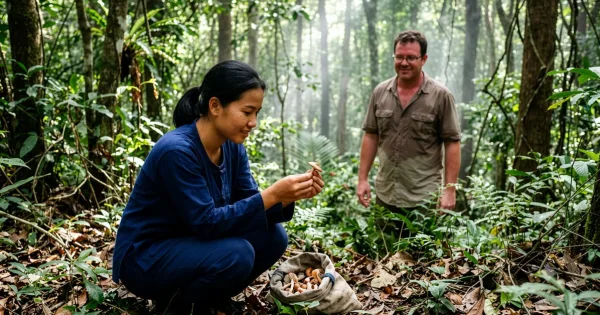
An Australian messaged me to say the woman I'd fallen for was his girlfriend of a year. Today she's my wife.
At 44, divorced for a decade, an American meets Tay on Facebook. A month later, already in love, he finds out she'd spent the past year with an Australian man who'd visited her village in Isan. She confesses everything honestly and asks for one chance. Years later, they're married and building a house to retire in.
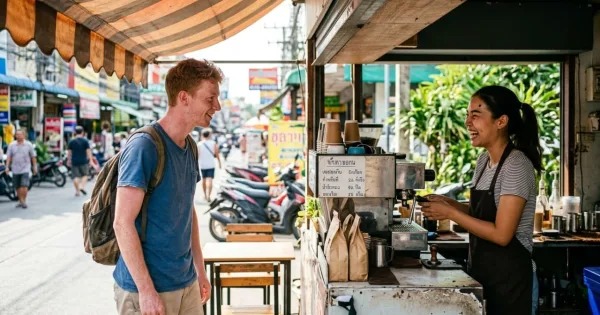
Om never asked me for a penny in two years. Now she runs Thai nights at our pub.
A 26-year-old Brit met Om in a bar on Soi Buakhao, Pattaya, then found her again months later serving coffee off Beach Road. Two years of her never asking for anything, a complicated visa and a wedding later, they now run a pub in England with Thai theme nights.
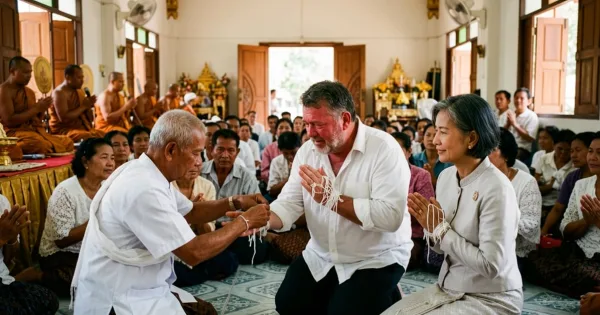
I told her I wouldn't send a single baht until we met in person. She accepted without arguing.
A 61-year-old American recounts how, after a failed relationship in Vietnam, he met May, a refreshingly honest Thai civil servant. Years of video calls and a temple wedding in Kanchanaburi with nearly 50 blessing strings later, he gained an entire family.
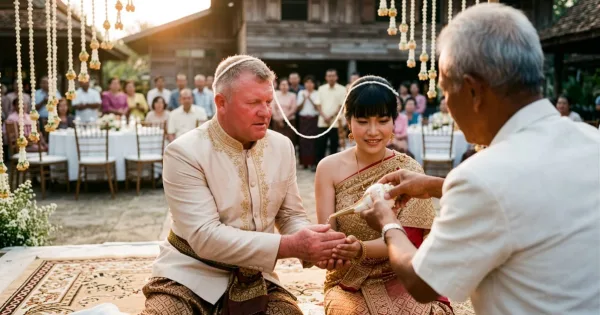
350 guests, a village chief consulting his charms for the date, and years later a message asking for a divorce.
A 50-year-old Australian recounts how a 350-guest Thai wedding in Phuket turned into a guest house in Patong, an affair with another woman, bar fights involving the police, and a final message asking for a divorce.
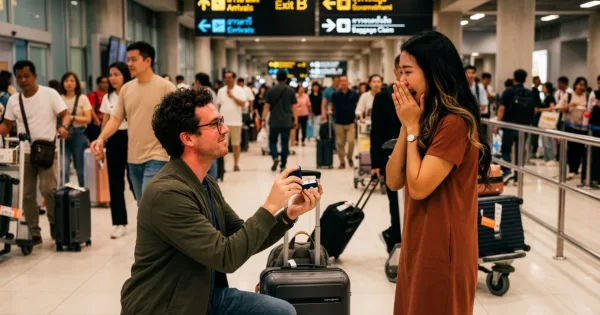
I went to Pattaya to forget a divorce. I ended up proposing to her at Bangkok airport.
A divorce sent me to Pattaya on holiday with my brother. There I met Nat, a single mother who'd lost her partner before her daughter was born. I fell in love, started doing bike deliveries at night to support her, and months later proposed at Bangkok airport. We've been married four years now in London.
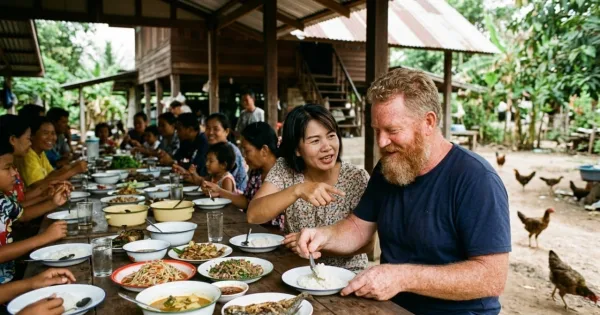
I went to Thailand on holiday after an eleven-year breakup in Scotland. Nineteen years later, I live with twelve in-laws under one roof.
Graham, a 51-year-old Scot, first came to Thailand at 32, on holiday after a long breakup. In the bars of Koh Samui he met Dao, the woman he'd later marry. Nineteen years, a Thai wedding, and a house built in Isaan later, he lives surrounded by her family and wouldn't change a thing.