Retirement in Thailand: Real Stories
In short
Retirement shows up in these stories as a starting point, not background scenery: men who leave an entire career behind, sometimes a marriage too, and decide the next chapter gets written in Thailand. Most arrive in their late fifties to seventies, already past the visa's own minimum age of 50, with a pension or savings meant to last the rest of their life rather than a salary that keeps arriving.
A retirement visa, a pension that stretches much further than back home, and a country that suddenly has to become a permanent address rather than a holiday destination. Retirement reads differently in these stories than a simple relocation does: it almost always arrives after something else has already ended — a career, a marriage, sometimes a spouse — rather than running alongside a job still in progress. This guide gathers the stories where retirement itself, not a relationship or work that came first, is the reason a foreigner is in Thailand at all.
What does this actually mean?
The most repeated pattern combines prior loneliness — widowhood, divorce, grown children who've moved on — with the search for a place where the pension allows a life that was no longer possible at home. Several arrive with no concrete plan, drawn by the climate or a friend's recommendation, and end up staying because of a person met along the way rather than the country itself. Antonio's story, in our Koh Samui guide, is the clearest example: he came to a resort simply to remember how to get up in the morning, not looking for anyone at all.
Common patterns
The outcomes split clearly: some built a stable life, with a partner, a house, and a routine, within just a few years — often the ones who kept their finances separate and let trust build slowly. Others, especially when they spent their savings with no safety cushion or handed control of a joint account to someone they'd known only months, ended up losing almost everything, including the ability to go home with any dignity. The worst-ending stories often overlap with what we cover in Sponsor Arrangements — retirees are, on average, the group most likely to end up supporting more than one household without fully realizing it.
Practical advice
The difference between the two groups is rarely luck — it's whether they arrived with a realistic financial plan and room for error, or gambled their savings all at once trusting it would work out. See our Visa & Immigration guide too for the retirement visa process itself, and Moving to Thailand if the relocation comes before retirement age rather than after leaving a career.
Frequently asked questions
What requirements does the retirement visa usually involve?
These stories mention mainly the minimum age (50) and proving sufficient income or savings; for the full official process see our Visa & Immigration guide.
Does retirement in Thailand usually come with a relationship?
In most of these stories yes, though the order varies: some retirees arrive alone and find a partner afterward, others already had one before retiring there.
What ruins retirees most often in these stories?
Spending savings all at once on businesses or a partner's family with no safety cushion, and having no plan to go home if something goes wrong.
Is it common for retirees to open a business?
Yes, it shows up in several stories: bars, guesthouses, restaurants. Failures show up too, when the business is set up without experience or enough capital for the low season.
Stories about Retirement in Thailand: Real Stories

I followed her one day instead of believing her story about the family visits. She didn't go to the bus station — she walked into a hotel with another man.
Retired in Pattaya since 2017, a 55-year-old Polish man falls for Apple, a 32-year-old bar girl with three kids to support. For months he believes he's the only man helping her out financially. One day he decides to follow her instead of believing the usual excuse, and discovers he was just one of several sponsors supporting her at the same time.
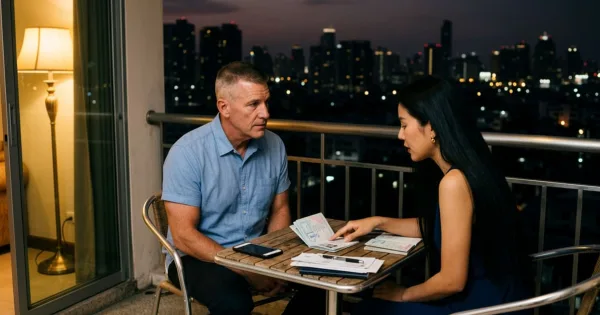
I checked her passport, her certificates, years of photos. It all lined up. It cost me $30,000 to learn that wasn't enough.
At 57, living in the quiet peace of a marriage that survived my wife's third affair, I met Pre at a bar in Nana Plaza, Bangkok. She was 37, looked 25, and had a perfectly verifiable story: passport, divorce papers, years of social media photos. Over six months I sent her 30,000 dollars for her family, her studies, and a Denmark visa that never came through.
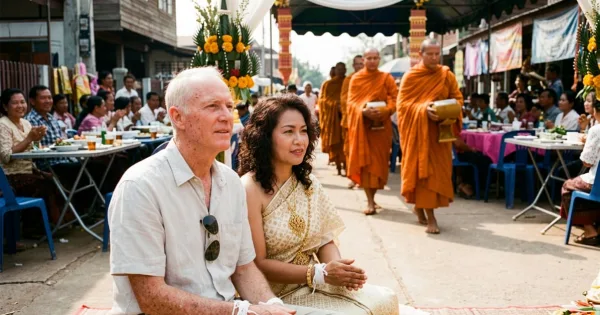
I opened a joint account with the million-baht dowry. She started quietly withdrawing money without telling me.
A 62-year-old retired American recounts how he met Dada at a Pattaya massage shop, married her in a Buddhist ceremony in Isan, and everything fell apart when she started quietly withdrawing money from the joint account he'd opened for the dowry.
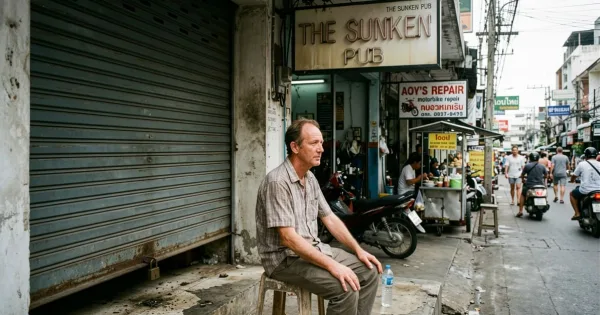
Ryan wanted to build a life in Pattaya. He ended up sleeping rough and died of a heart attack back in England.
A fellow expat remembers Ryan, an Englishman in his late 40s who opened two bars in Pattaya, lost his savings in both attempts, ended up sleeping rough, and died of a heart attack shortly after returning to England with nothing to show for it.
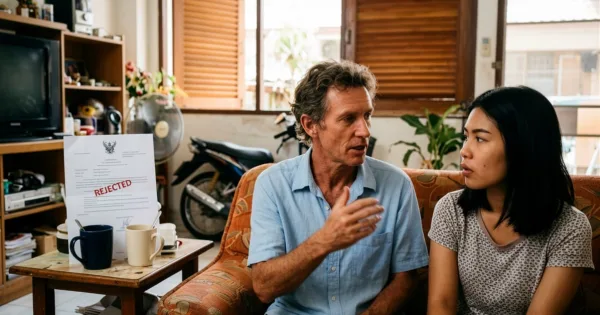
The reason for the visa rejection nearly made my head explode: she couldn't pronounce my name.
A 55-year-old Australian recounts how, after walking out of a relationship in Hua Hin in a bad mood, he wandered into the most boring looking bar in town and met the woman he'd marry in Perth years later, after a visa rejection for the strangest reason.
She called it being her boyfriend. Over time I realised I was actually her sponsor, one of several.
A recently retired American looks back on his relationship with a Thai woman he met in Hong Kong. What began as a romance with visits to Bangkok turned into a growing list of monthly payments, until he discovered he wasn't the only man supporting her.