Isaan Guide
In short
Isaan, Thailand's largest and poorest region, is where many of the Thai women in our stories are from — even those living in Bangkok, Chiang Mai or Pattaya — and understanding its economics (remittances, dowry, family obligation) is key to understanding almost any story on this site involving a partner from a humble background. Unlike the coastal and urban destinations on this site, very few relationships actually begin in Isaan itself — most start elsewhere and only bring the foreigner here later, when it's time to meet the family or attend the wedding.
Isaan doesn't show up in travel guides as often as Bangkok or Phuket, but it's probably the most important region for truly understanding relationships between foreigners and Thai women. This guide explains why so many stories on this site are rooted here, even when they physically take place in Chiang Mai, Bangkok or Pattaya. See our Thai Family & In-Laws guide too for the specific moment of visiting family in the region, and our Money guide for how remittances and dowry are typically handled.
What's it actually like here?
Northeastern Thailand, known as Isaan, is the country's largest and most populous region, and also historically its poorest and most rural. It relies mainly on agriculture, with drought seasons that have pushed entire generations for decades to seek work in Bangkok or abroad, sending remittances back to their families. Understanding this economic reality is the foundation for understanding almost any story on this site involving a Thai woman from a humble background. That contrast — a region central to almost every story's background, yet rarely the place where the story itself begins — is what sets Isaan apart from every other destination in this guide.
Relationships & everyday life
A significant share of the Thai women who appear in our stories, even those living in Bangkok, Chiang Mai or Pattaya, were born in Isaan and maintain strong economic and family ties to the region. It's common for them to send money to their parents regularly, to be part of a dowry arrangement when they marry, and for their family to view a relationship with a foreigner favorably — or with suspicion, depending on the case — based on the financial stability it might offer. None of that makes the relationship inherently self-interested by default: it's simply part of the cultural and economic context it develops in. The relationships that do form with a woman still living in Isaan tend to start through family introductions or a friend already married to a foreigner, rather than through the bars, apps or chance encounters typical of Bangkok, Pattaya or Chiang Mai.
Practical aspects
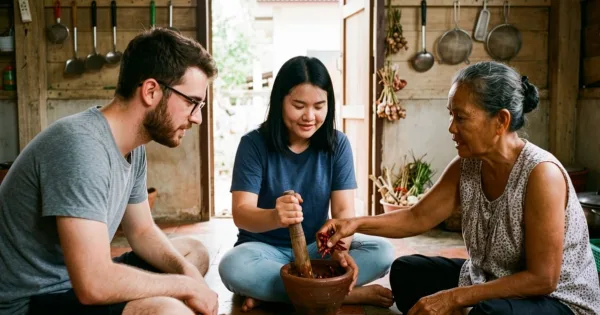
For a foreigner, understanding Isaan means accepting that financial responsibility toward the extended family isn't negotiable or something the couple can simply set aside — it's a deeply rooted social obligation. The dowry, family visits and occasional requests for help should be understood within that framework, without that meaning one should also lower one's guard against requests that are clearly unreasonable. Many couples visit Isaan before a wedding in Thailand precisely to see that context firsthand. Foreigners who visit regularly, rather than only for the wedding itself, are consistently described in these stories as being better received by the extended family than those who treat the visit as a single formality.
Frequently asked questions
Why are so many foreigners' Thai wives from Isaan?
For historical and economic reasons: as the country's poorest and most rural region, many women migrate to cities like Bangkok or Chiang Mai looking for work, where they meet foreigners, while still maintaining strong economic ties to their family in Isaan.
What is sin sod and how does it relate to Isaan families?
Sin sod is the dowry a groom gives to the bride's family before or during the wedding, a custom widespread across Thailand but especially significant in Isaan, where it can represent meaningful financial support for the family.
Is it common to visit Isaan before getting married?
Yes, many couples travel to Isaan to meet the family and see the home context before a wedding in Thailand, which helps the foreigner better understand their partner's economic and family reality.
How does family financial responsibility work for someone from Isaan?
It usually involves regularly sending money to parents and sometimes siblings or other relatives, an obligation seen as natural and expected rather than as something imposed on the relationship from outside.
Stories in Isaan
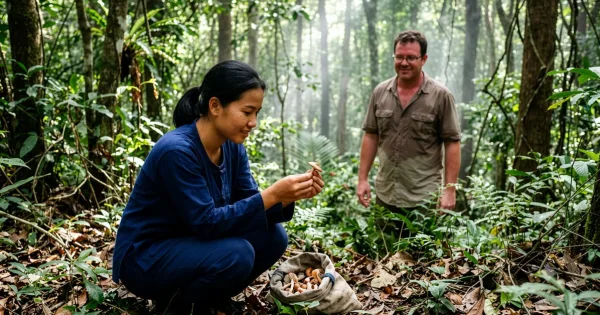
An Australian messaged me to say the woman I'd fallen for was his girlfriend of a year. Today she's my wife.
At 44, divorced for a decade, an American meets Tay on Facebook. A month later, already in love, he finds out she'd spent the past year with an Australian man who'd visited her village in Isan. She confesses everything honestly and asks for one chance. Years later, they're married and building a house to retire in.

I kept coming back to Pattaya for thirteen years. In the third bar on Soi Honey I met Jib.
A 42-year-old Dutchman started visiting Pattaya in 2010 and never stopped coming back every January. In 2022, in a bar on Soi Honey, he met Jib, from Isaan. Two years later he bought land from her family, fully aware of what that meant.
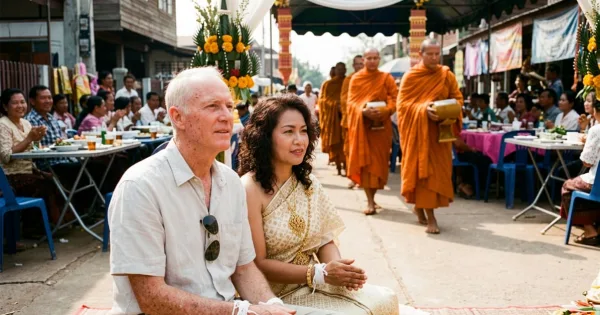
I opened a joint account with the million-baht dowry. She started quietly withdrawing money without telling me.
A 62-year-old retired American recounts how he met Dada at a Pattaya massage shop, married her in a Buddhist ceremony in Isan, and everything fell apart when she started quietly withdrawing money from the joint account he'd opened for the dowry.
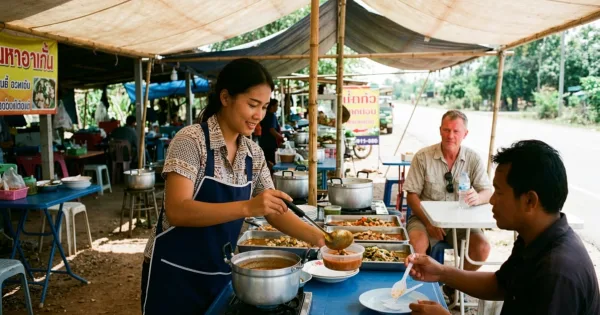
I gave her 400,000 baht and two years of my life. One day she went to a temple and never spoke to me again.
A 51-year-old Canadian recounts how he went from a tense relationship in Pattaya to supporting Lek for two years as she built a food stall in her village near Prakhon Chai, until she vanished without explanation after a temple retreat.
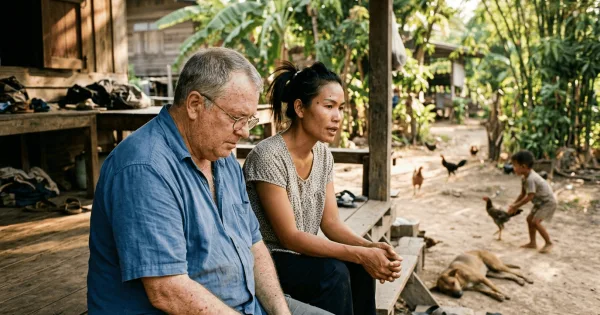
She called it being her boyfriend. Over time I realised I was actually her sponsor, one of several.
A recently retired American looks back on his relationship with a Thai woman he met in Hong Kong. What began as a romance with visits to Bangkok turned into a growing list of monthly payments, until he discovered he wasn't the only man supporting her.
Her mum had always planned for her to move to Germany and run the family business. I showed up two weeks before that was meant to start.
A 25-year-old British English teacher met Nisa in Khon Kaen, a university graduate from Isaan with zero interest in the nightlife scene. Her mum, living in Germany, had other plans for her daughter. This is the story of how he won the family over and decided to stay in Thailand.