Moving to Thailand: Real Stories
In short
The turning point is almost never one dramatic decision. It's usually a one-month trial that becomes two, then four, until one day there's no return ticket left on the calendar, just a visa renewal appointment. In these stories, the exact moment someone stops being a tourist tends to line up with the day they rent a flat in their own name instead of booking another hotel.
Falling for someone in Thailand is one story. Actually packing up a life abroad to go and live there is a different one. This guide gathers the stories where the foreigner moves, not just visits — renting a flat, opening a business, learning the language for real. Unlike our Retirement guide, the move here doesn't follow the end of a career — it runs alongside one: remote work, a new local business, or simply the decision to live somewhere else while still working.
What does this actually mean?
In several stories on this page, the move starts with remote work or retirement and continues with renting a flat of one's own, leaving hotels and seasonal bookings behind. Language marks a second, quieter dividing line: between people who memorize a handful of tourist phrases and people who sign up for regular lessons, these stories suggest a real difference in who actually stays and who ends up going home within a year.
Common patterns
In a number of cases it ends with an actual business: a guesthouse in Patong, a bar-restaurant, a Thai pub back in the home country after returning. Genuinely learning the language, beyond tourist "sawadee khrap," shows up as the step that marks the difference between visiting and staying. The relationship almost always comes before the decision to move, not the other way around: in the stories where someone relocates first and looks for a partner afterward, settling in tends to be slower and lonelier.
Practical advice
Not every move works out: this collection includes businesses that thrived and guesthouses that sank in low season. The pattern that separates the ones who stayed successfully is financial patience — not betting the savings all at once — and a solid relationship before, not after, deciding to move. See our Retirement in Thailand guide too if the move comes after leaving a career, or Visa & Immigration for the paperwork that makes settling in legally possible.
Frequently asked questions
How long does it take someone to go from visiting to actually moving?
In these stories it varies from months to years, but the common pattern is an initial trip that stretches longer, followed by repeat visits, until renting an actual flat replaces booking hotels.
Is it common to open a business after moving?
It shows up in several stories: guesthouses, bars, and restaurants. Failures show up too, especially when the business is set up too fast or without enough capital to cover the low season.
Do you need to speak Thai to move successfully?
It's not required, but in the stories where the foreigner genuinely learned the language — not just tourist greetings — integration was noticeably stronger.
Is moving to Thailand usually tied to a relationship?
In most of the stories on this page, yes, though the order varies: some move first and find a partner afterward, others do it the other way round.
Stories about Moving to Thailand: Real Stories
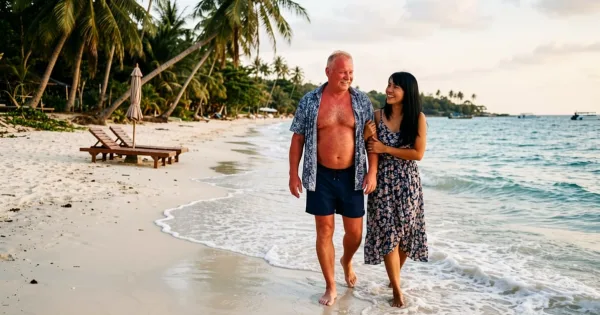
I followed her one day instead of believing her story about the family visits. She didn't go to the bus station — she walked into a hotel with another man.
Retired in Pattaya since 2017, a 55-year-old Polish man falls for Apple, a 32-year-old bar girl with three kids to support. For months he believes he's the only man helping her out financially. One day he decides to follow her instead of believing the usual excuse, and discovers he was just one of several sponsors supporting her at the same time.

She gave me a free bowl of noodles at her mum's stall. The buffalo has never been sick.
A 50-year-old Brit, freshly divorced, met Nitia, a maths teacher in Khon Kaen who'd spent years keeping men at arm's length. Years of FaceTime, visits dodging COVID, and a first daughter later, the wedding is no longer a possibility but a foregone conclusion.
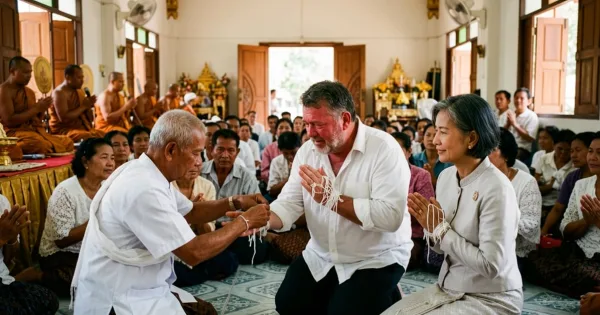
I told her I wouldn't send a single baht until we met in person. She accepted without arguing.
A 61-year-old American recounts how, after a failed relationship in Vietnam, he met May, a refreshingly honest Thai civil servant. Years of video calls and a temple wedding in Kanchanaburi with nearly 50 blessing strings later, he gained an entire family.

I dodged financial disaster with Charm. With Gop and her daughter I ended up as Papa without ever planning it.
A 54-year-old American recounts how a two-week trip to Thailand stretched on indefinitely: first dodging a woman with escalating financial demands, then building a life in Bangkok alongside Gop and her daughter, who ended up calling him Papa.
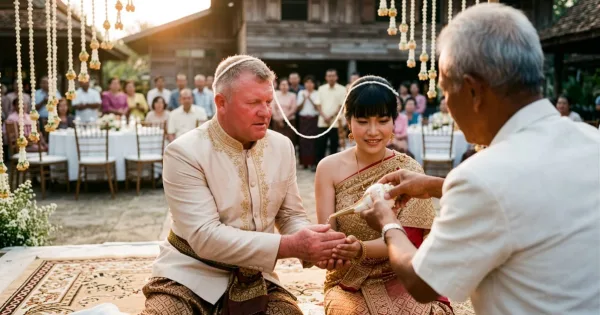
350 guests, a village chief consulting his charms for the date, and years later a message asking for a divorce.
A 50-year-old Australian recounts how a 350-guest Thai wedding in Phuket turned into a guest house in Patong, an affair with another woman, bar fights involving the police, and a final message asking for a divorce.
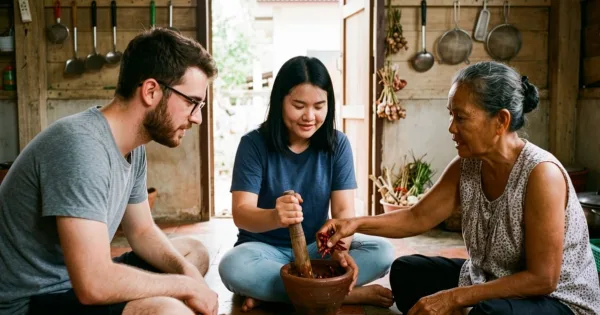
Her mum had always planned for her to move to Germany and run the family business. I showed up two weeks before that was meant to start.
A 25-year-old British English teacher met Nisa in Khon Kaen, a university graduate from Isaan with zero interest in the nightlife scene. Her mum, living in Germany, had other plans for her daughter. This is the story of how he won the family over and decided to stay in Thailand.